
Introduction: Salesforce in Australia
Customer Relationship Management (CRM) systems have become the backbone of modern businesses, enabling organizations to streamline sales, marketing, and customer service operations. Salesforce, as the global leader in CRM solutions, continues to dominate the Australian market, helping businesses enhance customer engagement, automate workflows, and drive revenue growth.
This blog explores the key Salesforce trends and demand drivers in Australia for 2025-26, offering advice to businesses looking to stay ahead in a competitive market.
Table of Contents
Introduction: Salesforce in Australia1. The Growing Adoption of Salesforce in Australia2. Key Salesforce Trends Shaping 2025-26 in Australia3. Demand Drivers for Salesforce in Australia (2025-26)4. Challenges & Considerations for Australian Businesses5. The Future Outlook: What’s Next for Salesforce in Australia?Conclusion
1. The Growing Adoption of Salesforce in Australia
1.1 Market Expansion and Industry Penetration
Salesforce has seen exponential growth in Australia, with businesses across sectors – finance, healthcare, retail, and government – increasingly adopting its cloud-based solutions. Key factors driving this adoption include
Digital Transformation: Australian businesses are prioritizing cloud migration to improve scalability and remote collaboration.
Customer-Centric Strategies: Companies are leveraging Salesforce to enhance customer experiences through personalized engagement.
Regulatory Compliance: Salesforce’s robust security features align with Australia’s stringent data protection laws (e.g., Consumer Data Right (CDR) and Privacy Act).
1.2 Demand for Salesforce Professionals
The surge in Salesforce adoption has led to a skills shortage, with high demand for:
Salesforce Administrators & Developers
Marketing Cloud Specialists
Salesforce Architects & Consultants
Organizations are investing in upskilling employees and hiring certified professionals to maximise their CRM investments.
2.1 AI-Powered CRM with Einstein AI
Salesforce Einstein AI is revolutionising CRM by enabling predictive analytics, automated workflows, and hyper-personalised customer interactions. Key applications in 2025-26 include the following:
Predictive Lead Scoring: AI identifies high-value leads, improving sales efficiency.
Chatbots & Virtual Assistants: AI-driven support reduces response times.
Sentiment Analysis: Businesses analyze customer feedback in real-time to improve satisfaction.
2.2 Hyper-Personalization with Customer Data Platforms (CDPs)
Salesforce CDP (Customer Data Platform) unifies customer data from multiple sources, allowing businesses to deliver tailored experiences. Trends include:
Real-Time Personalisation: Dynamic content recommendations based on customer behavior.
Omnichannel Engagement: Seamless customer journeys across email, social media, and in-store interactions.
2.3 Automation & Low-Code/No-Code Development
Salesforce Flow Builder and MuleSoft integrations enable businesses to automate processes without extensive coding. Key trends:
Citizen Developers: Non-technical users build custom apps using Salesforce Lightning.
RPA (Robotic Process Automation): Automating repetitive tasks like data entry and invoice processing.
2.4 Sustainability & ESG Reporting
Australian businesses are increasingly focusing on environmental, social, and governance (ESG) compliance. Salesforce Sustainability Cloud helps organizations:
Track Carbon Footprints
Generate ESG Reports
Align with Government Climate Policies
2.5 Hybrid Work & Salesforce Anywhere
With hybrid work becoming the norm, Salesforce Anywhere ensures seamless collaboration through:
Mobile-First CRM Access
Real-Time Collaboration Tools
Integration with Microsoft Teams & Slack
2.6 Data Security & Compliance
As cyber threats rise, Salesforce is strengthening its security framework with the following:
Zero Trust Security Models
Advanced Encryption for CDR Compliance
AI-Driven Threat Detection
2.7 Industry-Specific Salesforce Solutions
Salesforce is expanding its vertical-specific offerings, including the following:
Financial Services Cloud (for banking & insurance)
Health Cloud (for telehealth & patient management)
Manufacturing Cloud (for supply chain optimization)
3.1 E-Commerce & Retail Growth
Australia’s e-commerce sector is booming, with Salesforce Commerce Cloud enabling:
Unified Online & Offline Shopping Experiences
AI-Driven Product Recommendations
Seamless Checkout Processes
3.2 Government & Public Sector Adoption
Federal and state governments are leveraging Salesforce for:
Citizen Service Portals
Case Management for Social Services
Data-Driven Policy Making
3.3 Healthcare Digital Transformation
Post-pandemic, healthcare providers use Health Cloud for the following:
Patient Engagement & Telehealth
Electronic Health Record (EHR) Integration
AI-Powered Diagnostics Support
3.4 Financial Services Innovation
Banks and insurers rely on Salesforce for:
Open Banking Compliance
Personalized Financial Advice
Fraud Detection with AI
3.5 SME Adoption of Salesforce
Small and medium enterprises (SMEs) are embracing Salesforce due to:
Cost-Effective Starter Plans
Scalability for Growth
Access to Enterprise-Grade CRM Features
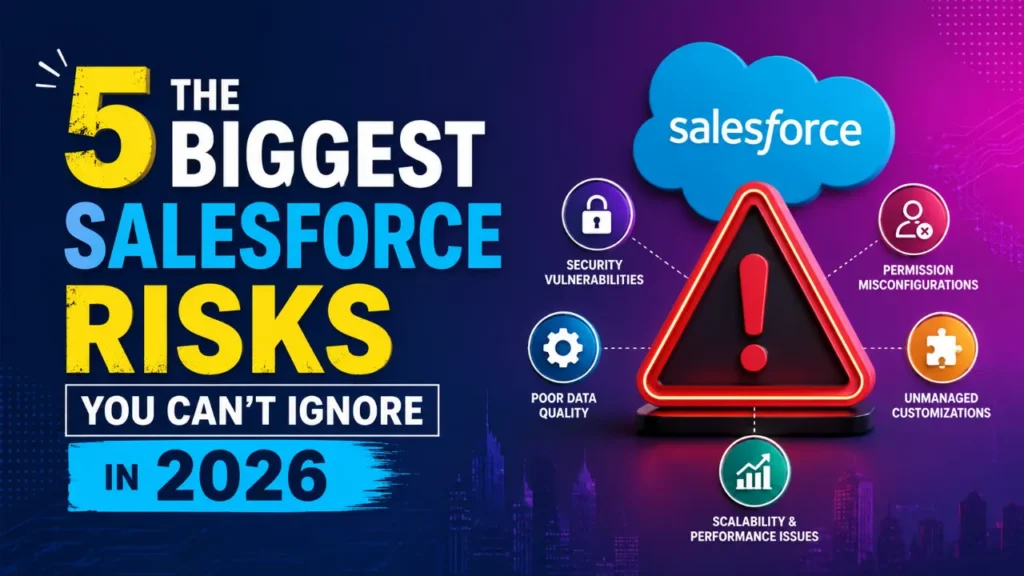
While Salesforce offers immense benefits, businesses must address the following:
Integration Complexity (legacy systems, third-party apps)
Data Privacy & Compliance Risks
High Implementation Costs for SMEs
Need for Continuous Employee Training
By 2026, we can expect:
Deeper AI & Machine Learning Integration
Expansion of Metaverse CRM Experiences (virtual showrooms, AR customer support)
Stronger Partnerships with Australian Tech Firms
Increased Focus on Ethical AI & Responsible Data Use
Salesforce continues to be a game-changer for Australian businesses in 2025-26, driven by AI, automation, and a strong focus on customer experience. Companies that embrace these trends will gain a competitive edge, while those slow to adapt risk falling behind.
For organizations considering Salesforce, the key to success lies in strategic implementation, employee training, and staying updated with emerging technologies. As the CRM landscape evolves, Salesforce remains at the forefront, helping Australian businesses thrive in a digital-first economy.
Part of the team turning Salesforce and AI strategy into shipped, measurable outcomes for enterprises across five regions.