

Why Salesforce Says AI Won’t Kill SaaS
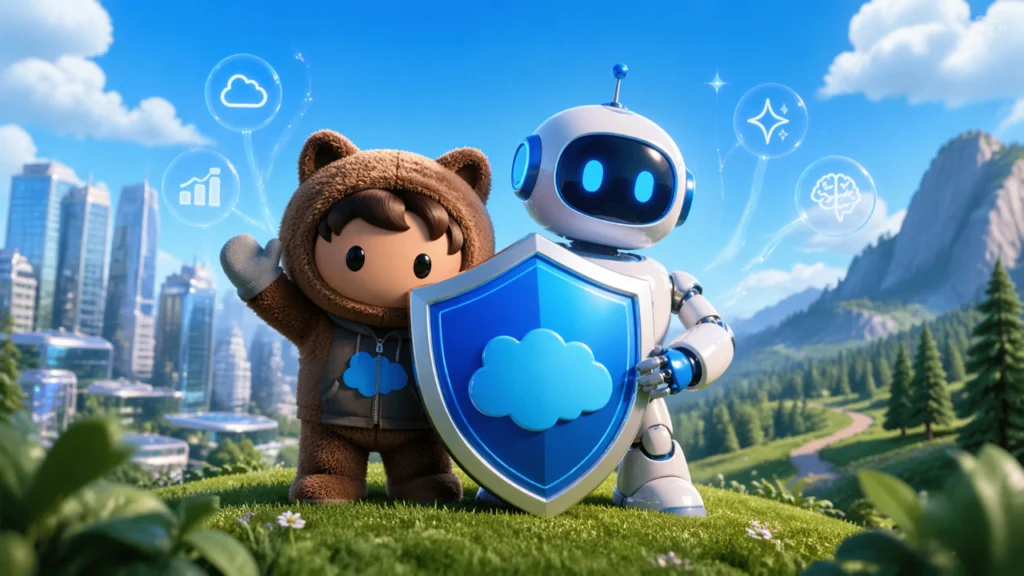
Introduction: Salesforce Says AI Won’t Kill SaaS
The rise of artificial intelligence has triggered a wave of speculation across the tech world. One of the boldest claims is that AI could eventually replace SaaS (Software as a Service) altogether. With AI systems capable of automating workflows, generating code, and making complex decisions, it’s easy to assume that traditional software platforms might become obsolete.
However, this perspective overlooks a critical reality. Instead of eliminating SaaS, AI is reshaping it—making it more powerful, more adaptive, and more valuable than ever. This is precisely the stance Salesforce has taken. Rather than viewing AI as a threat, the company sees it as an evolution of the SaaS model.
This blog explores why AI won’t kill SaaS, how the relationship between the two is evolving, and what it means for businesses, developers, and the future of software.
Table of Contents
The Myth: AI as a Replacement for SaaS
The idea that AI could replace SaaS comes from a misunderstanding of what SaaS actually provides. Many assume SaaS is just about delivering software through the cloud. But in reality, SaaS platforms are much more than tools—they are structured ecosystems that manage data, enforce business logic, ensure security, and enable collaboration.
AI, on the other hand, is not a standalone system that replaces these foundations. It depends heavily on structured data, defined processes, and reliable infrastructure—all of which SaaS platforms provide.
AI without SaaS would be like a brain without a body. It can think, but it cannot act effectively in a business environment.
SaaS as the Foundation of Modern AI
One of the key reasons AI won’t replace SaaS is that it relies on SaaS platforms to function effectively. AI systems require:
- Clean and structured data
- Defined workflows
- Secure environments
- Integration across systems
SaaS platforms already excel at providing these capabilities. They act as the operational backbone where AI can plug in and deliver value.
For example, an AI model might generate insights about customer behaviour, but it still needs a system to store customer data, track interactions, and execute actions. That system is SaaS.
This means AI doesn’t eliminate SaaS—it amplifies its importance.
From Software to Intelligent Systems
What’s really happening is a transformation of SaaS into something more intelligent. Traditional SaaS required users to interact directly with interfaces—clicking buttons, filling forms, and navigating dashboards.
With AI, this interaction model is changing.
Instead of manually performing tasks, users can now:
- Ask questions in natural language
- Automate workflows with simple instructions
- Receive predictive recommendations
- Delegate repetitive tasks to AI agents
This shift doesn’t remove SaaS—it enhances it. The software becomes smarter, more intuitive, and more efficient.
In this new model, SaaS platforms act as the execution layer, while AI acts as the intelligence layer.
The Rise of AI + SaaS (Not AI vs SaaS)
A more accurate way to understand the future is not AI versus SaaS, but AI plus SaaS.
This combination creates a powerful system where:
- SaaS manages operations and data
- AI analyzes, predicts, and automates
- Users interact through simplified interfaces
Together, they create a seamless experience that is far more valuable than either could provide alone.
This is why companies are not abandoning SaaS—they are investing more in it, integrating AI into their existing platforms to unlock new capabilities.
Why SaaS Still Matters More Than Ever
Even in an AI-driven world, SaaS continues to play a critical role. Here’s why:
1. Data Ownership and Structure
AI models depend on high-quality data. SaaS platforms ensure that data is structured, organised, and accessible. Without this foundation, AI outputs become unreliable.
2. Security and Compliance
Businesses operate in regulated environments where data privacy and compliance are essential. SaaS platforms provide built-in security frameworks that AI alone cannot replace.
3. Workflow Management
AI can suggest actions, but workflows define how those actions are executed. SaaS platforms manage approvals, processes, and business logic.
4. Integration Across Systems
Organizations use multiple tools and systems. SaaS platforms act as integration hubs, connecting different applications and ensuring smooth data flow.
5. Scalability and Reliability
SaaS platforms are built to handle large-scale operations. AI models rely on this infrastructure to deliver consistent performance.
The Role of AI Agents in SaaS
One of the most exciting developments is the rise of AI agents within SaaS platforms. These agents can:
- Automate repetitive tasks
- Interact with users conversationally
- Execute multi-step workflows
- Continuously learn and improve
However, these agents still operate within SaaS environments. They don’t replace the platform—they extend its capabilities.
Think of AI agents as digital assistants working inside a structured system. They enhance productivity but still depend on the underlying platform to function.
What This Means for Businesses
For businesses, the message is clear: AI is not a reason to move away from SaaS—it’s a reason to embrace it more deeply.
Companies should focus on:
1. Integrating AI into Existing Systems
Instead of replacing current tools, businesses should investigate how to embed AI into their workflows.
2. Investing in Data Quality
AI is only as excellent as the data it uses. Clean, structured, and well-managed data becomes a competitive advantage.
3. Upskilling Teams
Employees need to learn how to work alongside AI—using it to enhance productivity rather than fearing it as a replacement.
4. Automating Smartly
Not every process should be automated. Businesses need to identify high-impact areas where AI can deliver real value.
What It Means for Developers and Admins
The evolution of SaaS with AI also changes the role of developers and administrators.
Instead of just building features, they now need to:
- Design intelligent workflows
- Integrate AI models into applications
- Ensure ethical and responsible AI usage
- Focus on user experience and automation
This shift creates new opportunities. Developers are no longer just coders—they become architects of intelligent systems.
The Future: SaaS Becomes Invisible
One of the most interesting predictions is that SaaS may become less visible to users. Instead of interacting with dashboards and menus, users will interact with AI interfaces that sit on top of SaaS platforms.
In this model:
- Users describe what they want
- AI interprets the request
- SaaS executes the action
The platform still exists, but it operates in the background.
This doesn’t mean SaaS is disappearing—it means it’s becoming more seamless and integrated into everyday workflows.
Challenges to Watch
While the combination of AI and SaaS is powerful, it also introduces challenges:
1. Trust and Accuracy
AI systems are not perfect. Businesses need to ensure that outputs are reliable and trustworthy.
2. Data Privacy
As AI uses more data, concerns around privacy and security increase.
3. Complexity
Integrating AI into existing systems can be complex and requires careful planning.
4. Ethical Considerations
Organizations must ensure that AI is used responsibly, avoiding bias and unfair outcomes.
Conclusion
The idea that AI will kill SaaS is more myth than reality. What we are witnessing is not the end of SaaS, but its evolution. SaaS platforms provide the structure, security, and scalability that AI needs to function. In return, AI brings intelligence, automation, and efficiency to SaaS. Together, they form a powerful combination that is reshaping the future of software.
For businesses, this means adapting to a new way of working—one where software is not just a tool but an intelligent partner. For developers and tech professionals, it opens up new opportunities to build smarter, more impactful solutions. The future isn’t AI replacing SaaS. It’s AI that is transforming SaaS into something far more powerful than ever.