

Salesforce TDX 2026: Inside the Agentic Enterprise Event
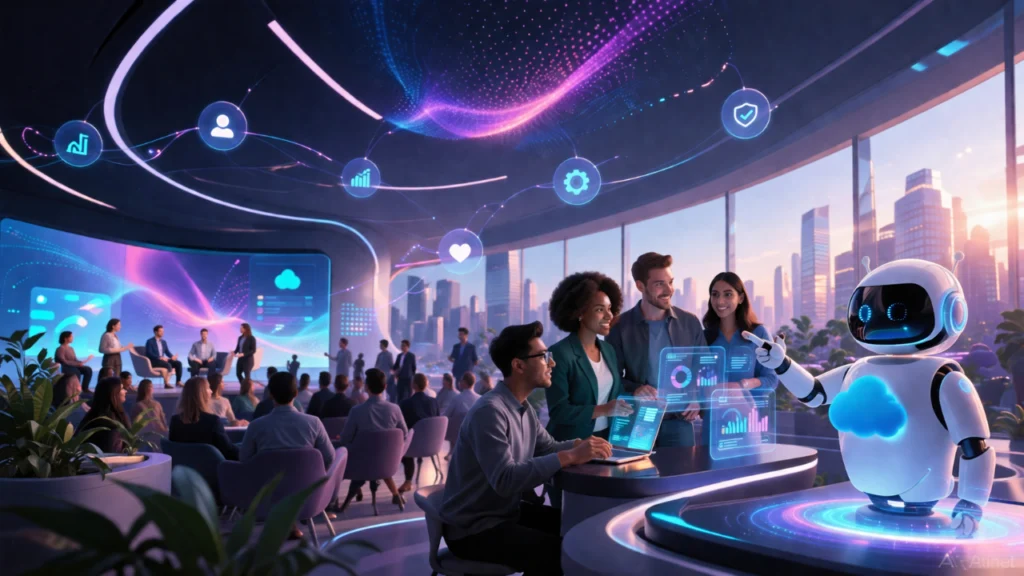
The future of enterprise technology is no longer just about automation—it’s about intelligent collaboration between humans and AI agents. Salesforce TDX 2026 showcased exactly this shift, introducing the concept of the “Agentic Enterprise”, where autonomous AI agents actively participate in business processes, decision-making, and customer engagement. This transformation marks a major leap from traditional CRM systems to dynamic, intelligent ecosystems that continuously learn and evolve.
Table of Contents
The Rise of the Agentic Enterprise
At the heart of TDX 2026 was the idea that businesses are moving beyond static workflows into adaptive, AI-driven environments. An agentic enterprise is one where AI agents are not just tools but active participants. These agents can understand context, make decisions, execute tasks, and collaborate with human teams in real time.
Unlike earlier automation systems that required predefined rules, agentic systems rely on advanced AI models capable of reasoning and learning. This allows organizations to respond faster to changes, personalise customer experiences at scale, and reduce manual workloads across departments.
Key Announcements and Innovations
Salesforce introduced several groundbreaking innovations that support the agentic enterprise vision. These include enhanced AI capabilities, deeper integration across platforms, and tools designed to empower developers and businesses alike.
1. Autonomous AI Agents
One of the most significant highlights was the introduction of autonomous AI agents embedded across the Salesforce ecosystem. These agents can handle tasks such as customer support, lead qualification, sales forecasting, and even marketing campaign optimisation without constant human intervention.
For example, in customer service, AI agents can resolve common issues, escalate complex cases intelligently, and learn from past interactions to improve future responses. In sales, they can analyze customer behaviour, suggest next-best actions, and even initiate follow-ups.
2. Unified Data Cloud Evolution
Data continues to be the backbone of any AI system. Salesforce emphasised enhancements to its Data Cloud, enabling real-time data unification from multiple sources. This ensures that AI agents operate with accurate, up-to-date information.
With improved data harmonisation, businesses can achieve a 360-degree view of their customers, allowing AI agents to deliver highly personalized experiences. This also enhances predictive analytics, enabling organizations to anticipate customer needs before they arise.
3. Low-Code and Pro-Code Development Tools
TDX 2026 highlighted tools designed for both developers and non-technical users. Low-code platforms allow business users to create workflows and deploy AI agents with minimal coding, while pro-code tools give developers the flexibility to build highly customised solutions.
This dual approach ensures that organizations can innovate quickly without facing technical barriers. It also accelerates digital transformation by empowering teams across departments to contribute to AI-driven initiatives.
4. Enhanced Security and Governance
With the rise of autonomous systems, security and governance become critical. Salesforce introduced advanced controls to ensure that AI agents operate within defined boundaries.
These include audit trails, compliance frameworks, and ethical AI guidelines. Businesses can monitor agent behaviour, ensure data privacy, and maintain trust with customers while leveraging powerful AI capabilities.
Real-World Use Cases
The agentic enterprise is not just a concept—it’s already being applied across industries. TDX 2026 showcased several real-world scenarios demonstrating how AI agents can transform business operations.
Customer Support Transformation
AI agents are revolutionising customer support by providing instant, accurate responses 24/7. They can handle large volumes of queries, reduce response times, and improve customer satisfaction.
More importantly, they free up human agents to focus on complex issues that require empathy and critical thinking. This creates a balanced approach where AI handles efficiency, and humans handle experience.
Sales Acceleration
In sales, AI agents act as intelligent assistants. They analyze customer data, identify high-potential leads, and recommend strategies to close deals faster.
By automating repetitive tasks such as data entry and follow-ups, sales teams can focus on building relationships and driving revenue. This leads to higher productivity and better outcomes.
Marketing Personalization
Marketing is becoming increasingly data-driven, and AI agents play a crucial role in delivering personalized campaigns. They can segment audiences, optimize content, and adjust strategies in real time based on performance metrics.
This level of personalization helps businesses connect with customers on a deeper level, increasing engagement and conversion rates.
Operations and Workflow Automation
AI agents streamline internal operations by automating workflows across departments. From HR processes to supply chain management, they ensure efficiency and reduce errors.
For example, in HR, agents can assist with recruitment, onboarding, and employee engagement. In supply chain management, they can predict demand, optimize inventory, and manage logistics.
The Role of Developers at TDX 2026
Salesforce TDX has always been a developer-focused event, and 2026 was no exception. Developers play a crucial role in building and customising agentic systems.
The event introduced new APIs, SDKs, and development frameworks that make it easier to create and deploy AI agents. Developers can now design agents that integrate seamlessly with existing systems, ensuring a smooth transition to the Agentic Enterprise model.
Additionally, Salesforce emphasised the importance of responsible AI development. Developers are encouraged to build systems that are transparent, ethical, and aligned with business goals.
Challenges and Considerations
While the Agentic Enterprise offers immense potential, it also comes with challenges. Organizations must address several key considerations to successfully adopt this model.
Data Quality and Integration
AI agents rely heavily on data. Poor data quality can lead to inaccurate insights and decisions. Businesses must invest in data management practices to ensure reliability.
Change Management
Transitioning to an Agentic Enterprise requires a cultural shift. Employees must adapt to working alongside AI agents, which may involve training and mindset changes.
Ethical AI Usage
As AI systems become more autonomous, ethical considerations become increasingly important. Businesses must ensure that AI decisions are fair, unbiased, and transparent.
Security Risks
With greater automation comes increased risk. Organizations must implement robust security measures to protect data and prevent misuse of AI systems.
The Future of Work in an Agentic Enterprise
TDX 2026 painted a clear picture of the future of work. Humans and AI agents will collaborate seamlessly, each focusing on their strengths.
AI will handle repetitive, data-intensive tasks, while humans will focus on creativity, strategy, and relationship-building. This synergy will lead to more efficient operations, better decision-making, and improved customer experiences.
The workplace will become more dynamic, with AI agents acting as digital teammates. Employees will rely on these agents for insights, recommendations, and execution support.
Why TDX 2026 Matters
Salesforce TDX 2026 is more than just a technology event—it’s a glimpse into the future of business. The shift toward the agentic enterprise represents a fundamental change in how organizations operate.
By embracing AI agents, businesses can unlock new levels of efficiency, innovation, and customer satisfaction. However, success will depend on how well organizations integrate these technologies into their existing processes and culture.
Conclusion
Salesforce TDX 2026 highlighted a transformative vision where AI agents become integral to enterprise operations. The agentic enterprise is not a distant future—it’s already taking shape.
Organizations that adopt this model early will gain a competitive advantage, leveraging AI to drive growth and innovation. By focusing on data, security, and ethical practices, businesses can harness the full potential of AI agents while maintaining trust and accountability.
As we move forward, the collaboration between humans and intelligent systems will redefine what’s possible in the enterprise world. TDX 2026 has set the stage for this evolution, marking the beginning of a new era in digital transformation.