
Salesforce Refuses Ransom After Salesloft Drift Hack
Introduction: Salesloft Drift Hack
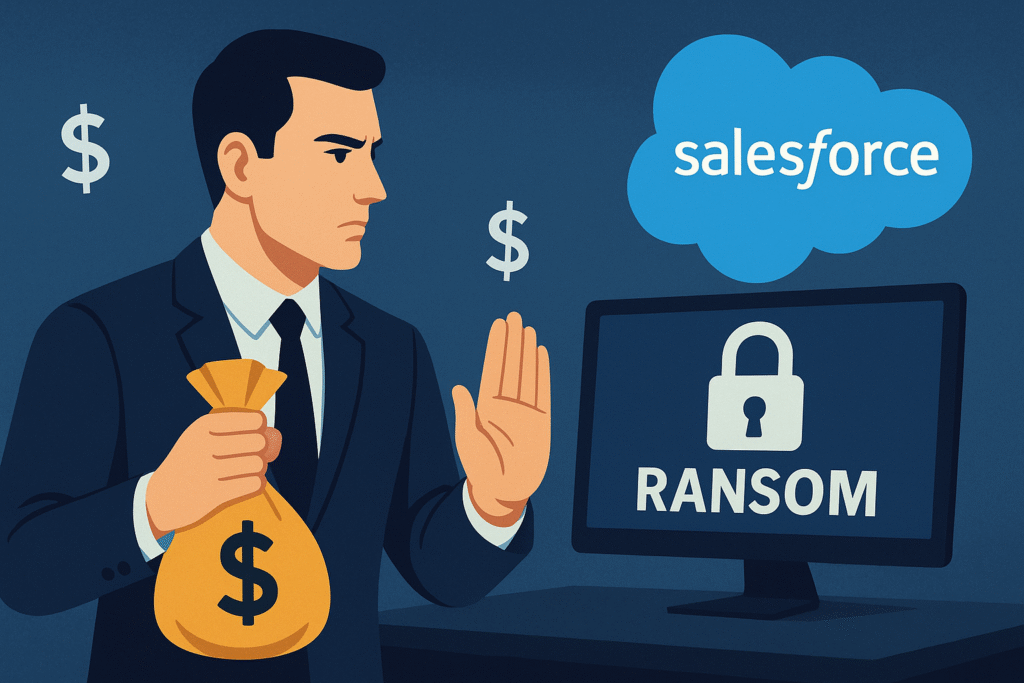
In October 2025, Salesforce faced a major cybersecurity incident that had a significant impact on the enterprise software world. A hacker group claimed to steal sensitive data from Salesforce’s customers using weaknesses in Cellsoft’s Drift integration and sought a ransom of about $1 billion. Despite the enormous dose and potential impact of the violation, the Salesforce made a firm decision not to pay the ransom by strengthening its commitment to security and trust.
Table of Contents
The Nature of the Breach
The violation was caused by a drift application of Selsoloft, which is a widely cooperated-with AI-operated messaging and engagement platform with Salesforce. The assailants made admission using the allegedly compromised OAuth and refresh tokens. Sophisticated social engineering, including voice phishing, obtained these tokens, which allow applications to certify and access sales for systems on behalf of users.
Once the attackers were admitted, they were able to extract a large amount of sensitive customer data, including contact information, case records, and other business-deciding details. When the main system of sales for the system was not directly compromised, the incident underlined the risks in each other’s connected ecosystems and third-party integrations.
The hacker group behind the attack, which identified itself as a coalition of well-known cybercriminal organizations, claimed to receive data from hundreds of companies. They then launched a data extortion campaign, threatening to disclose the stolen information until the ransom was paid.
Salesforce’s Response
Salesforce responded quickly and decisively. The company emphasised that it would not be associated with the extortionists or pay the ransom. In the statements given to consumers and the public, the salesforce emphasised that the hackers who paid will weaken security principles and promote more attacks.
Salesforce worked closely with Salesloft to eliminate the drift integration of the platform until all affected tokens were cancelled and the security was fully reviewed. The company also assured customers that it had secured its main systems and that the attack was limited to third-party integration.
Industry and Expert Reactions
The violation has begun widespread debate over the security of third-party applications and the responsibilities of SaaS providers in protecting client data. Security experts assert that weaknesses in attached applications can be as harmful as the direct breakdown of core systems.
Many analysts have emphasised the necessity of a rigorous audit of third-party integration, the implementation of strong entry restrictions, and the maintenance of extensive monitoring. The phenomenon also strengthened the importance of multi-powered authentication and cautious token management to reduce the risk of unauthorised entry.
From an organisational point of view, this attack reminds us that cybersecurity is not only a technical issue but also a strategic concern. Depending on the cloud-based ecosystems, industries should ensure that all integrated applications meet strict security standards, as a weak link can compromise the entire network.
Lessons Learned
This incident underscores several key lessons for businesses and technology providers:
- Third-party risk management: Even if the main platform is secure, weaknesses in integrated applications can lead to significant violations. Organizations should carefully examine and monitor all third-party equipment.
- Preparation and reaction: Instant procedures to prevent potential damage, such as cancellation of the settlement tokens and separating the affected systems, are crucial.
- Ransomware and ransom policies: Salesforce’s refusal to pay ransom strengthens the principle that negotiations with cybercriminals can promote more attacks and weaken industry-wide security efforts.
- Data Protection Awareness: Employees must be trained to identify sophisticated attacks such as social engineering tactics, especially voice phishing, which can evade technical security.
- Transparency and Communication: In situations associated with sensitive data breaches, immediate communication with consumers helps maintain trust.
The Broader Implications
Management of violations by Salesforce highlights the increasing challenge in the digital enterprise landscape: protection of each other’s software ecosystems. As businesses increasingly depend on multiple SaaS applications that communicate and share information, the risk surface is extended. A tampered third-party application can potentially expose a large amount of sensitive data, which was found in this case.
In addition, this phenomenon shows the evolving nature of cybercrime. Hackers are no longer targeting big bodies with direct attacks; they are increasingly using weak links within a reliable network to enhance the impact. This change requires an active approach to cyber protection, including technological safety, employee awareness, and strong seller management.
Key Takeaway:
The Salesforce Salesloft Drift event acts as a warning and model for modern cybersecurity practices. It explains how each other’s connected systems can increase the risk, while it also shows how a strong, theoretical reaction can protect faith and prevent future attacks. Refusal to pay ransom through Salesforce, with immediate action steps, underlines the importance of a constant dedication to elasticity, preparation, and security in today’s complex digital landscape.
As industries continue to adopt cloud-based ecosystems, lessons from this violation will widely resonate, reminding the organizations to be vigilant, manage third-party risks, and maintain an active approach to protecting sensitive information.