

How Slack AI Bot Is Changing Salesforce Productivity
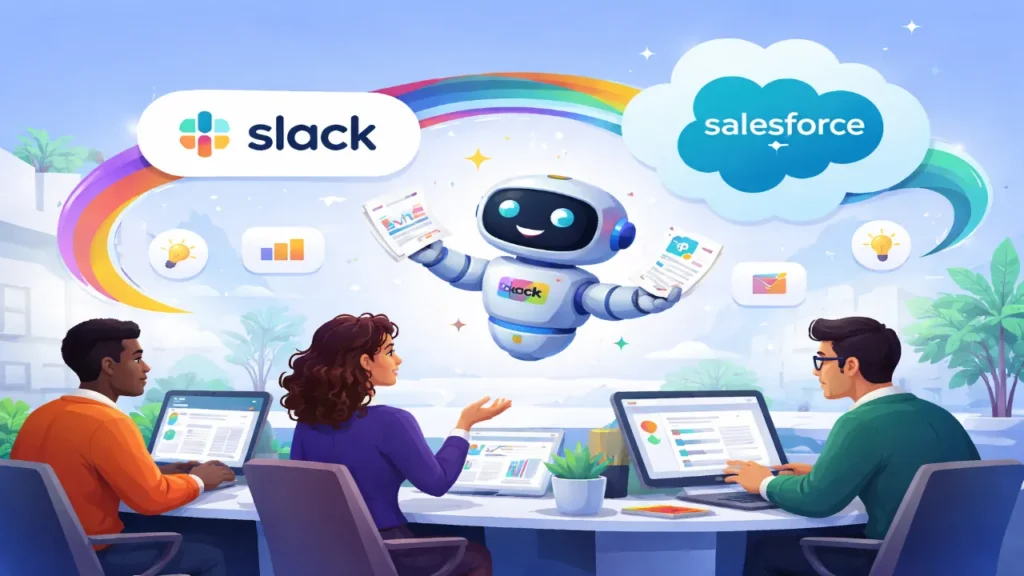
In today’s fast-paced digital workplace, businesses rely heavily on collaboration and customer relationship management (CRM) tools to stay competitive. The integration of intelligent automation into these platforms has transformed how teams communicate, analyze data, and make decisions. One of the most impactful developments in this space is the rise of AI-powered assistants within workplace communication tools.
The combination of Slack and Salesforce through AI-driven features is reshaping productivity across sales, service, marketing, and operations teams. By embedding artificial intelligence into daily conversations and workflows, organizations are unlocking faster insights, reducing manual effort, and improving customer engagement.
This article explores how Slack AI Bots are changing Salesforce productivity, the benefits they deliver, real-world use cases, challenges, and what the future holds.
Table of Contents
Understanding Slack AI Bots and Salesforce Integration
Slack AI Bots are intelligent assistants that operate within Slack channels and direct messages. They use machine learning and natural language processing to understand user queries, summarize content, retrieve data, and automate tasks.
When integrated with Salesforce, these bots connect communication directly with CRM data. Instead of switching between platforms, employees can access customer records, pipeline updates, and analytics from within Slack.
This integration creates a unified digital workspace where conversations and customer data coexist, enabling teams to work more efficiently.
The Traditional Productivity Challenge in CRM Workflows
Before AI-driven integration, Salesforce users often faced several productivity barriers:
1. Context Switching
Employees had to move between Slack, Salesforce dashboards, emails, and spreadsheets. This constant switching reduced focus and increased time spent on routine tasks.
2. Manual Data Retrieval
Finding customer details, case histories, or deal statuses required navigating multiple Salesforce screens, slowing down response times.
3. Information Overload
Important updates were buried in long email threads, chat conversations, and CRM reports, making it difficult to extract key insights quickly.
4. Delayed Decision-Making
Without instant access to analytics, managers and executives often waited for reports before making strategic decisions.
Slack AI Bots address these challenges by bringing intelligence and automation directly into daily communication.
How Slack AI Bots Improve Salesforce Productivity
1. Instant Access to CRM Data
Slack AI Bots allow users to retrieve Salesforce data using simple commands or natural language queries.
For example:
- “Show me today’s open deals.”
- “Get details for account ABC Corp.”
- “List high-priority service cases.”
Within seconds, the bot displays accurate CRM information in Slack, eliminating the need to log in separately.
Impact:
- Saves time
- Improves response speed
- Reduces dependency on CRM specialists
2. Automated Summaries and Insights
One of the most powerful features of Slack AI is its ability to summarize complex information.
It can:
- Summarize long Slack threads related to customers
- Generate daily or weekly Salesforce activity reports
- Highlight key pipeline changes
- Extract trends from service cases
Instead of reading lengthy reports, employees get concise, actionable summaries.
Impact:
- Reduces information overload
- Improves clarity
- Enhances strategic focus
3. Real-Time Sales Pipeline Monitoring
Sales teams depend on accurate pipeline visibility. Slack AI Bots continuously monitor Salesforce data and share updates in real time.
They can notify teams about:
- Deal stage changes
- Large opportunity closures
- Forecast risks
- Missed follow-ups
This keeps everyone aligned and accountable.
Impact:
- Better forecasting
- Faster deal resolution
- Improved collaboration
4. Enhanced Customer Support Operations
Customer service teams benefit significantly from AI-powered Slack bots.
Key capabilities include:
- Fetching case details instantly
- Suggesting knowledge base articles
- Recommending solutions based on past cases
- Escalating urgent issues automatically
Agents can resolve queries faster without leaving Slack.
Impact:
- Reduced response time
- Higher customer satisfaction
- Lower case backlog
5. Workflow Automation and Task Management
Slack AI Bots can automate repetitive Salesforce-related tasks such as:
- Creating leads from chat messages
- Updating opportunity stages
- Assigning cases
- Scheduling follow-ups
- Logging customer interactions
These actions can be triggered by keywords, forms, or AI recommendations.
Impact:
- Less manual work
- Fewer errors
- Higher operational efficiency
6. Intelligent Notifications and Alerts
Not all updates require immediate attention. Slack AI Bots use prioritization algorithms to filter important information.
They can send alerts for:
- High-value deal risks
- SLA breaches
- Contract renewals
- Customer churn signals
This ensures teams focus on what matters most.
Impact:
- Better time management
- Reduced distractions
- Improved performance
7. Knowledge Sharing and Training Support
Slack AI Bots also act as knowledge assistants.
They can:
- Answer questions about Salesforce processes
- Provide onboarding guidance
- Share best practices
- Retrieve internal documentation
New employees become productive faster, and experienced users save time searching for resources.
Impact:
- Faster onboarding
- Consistent knowledge access
- Reduced dependency on managers
Department-Wise Impact on Productivity
Sales Teams
For sales professionals, Slack AI Bots act as virtual assistants.
Benefits include:
- Quick access to lead and opportunity data
- Automated follow-up reminders
- Real-time deal insights
- Collaboration within deal channels
Result: Increased win rates and shorter sales cycles.
Customer Service Teams
Support teams rely on speed and accuracy.
Slack AI Bots provide:
- Case summaries
- Suggested responses
- Priority alerts
- Escalation automation
Result: Improved service quality and reduced resolution time.
Marketing Teams
Marketers benefit from AI-driven CRM insights.
Slack AI Bots help with:
- Campaign performance updates
- Lead quality analysis
- Attribution reports
- Audience segmentation data
Result: More targeted campaigns and higher ROI.
Management and Leadership
Executives and managers gain strategic visibility.
They can receive:
- Performance dashboards
- Revenue forecasts
- Team productivity summaries
- Risk alerts
Result: Faster, data-driven decisions.
Security, Compliance, and Governance
Integrating AI bots with CRM systems requires strong security controls.
Modern Slack AI and Salesforce integrations offer:
- Role-based access control
- Data encryption
- Audit logs
- Compliance with industry regulations
- Controlled data sharing
Organizations can ensure sensitive customer data remains protected while benefiting from automation.
Challenges and Limitations
Despite its advantages, Slack AI integration is not without challenges.
1. Data Quality Issues
AI bots depend on accurate Salesforce data. Incomplete or outdated records reduce effectiveness.
2. Initial Setup Complexity
Configuration, permissions, and customization require planning and technical expertise.
3. User Adoption Barriers
Some employees may resist AI tools due to unfamiliarity or trust concerns.
4. Over-Reliance on Automation
Excessive dependence on bots may reduce critical thinking and human judgment in complex situations.
Addressing these challenges through training, governance, and continuous optimization is essential.
Best Practices for Maximizing Productivity
To get the most from Slack AI and Salesforce integration, organizations should follow these best practices:
1. Define Clear Use Cases
Identify high-impact scenarios such as deal tracking, case management, and reporting.
2. Maintain High Data Quality
Regularly clean and update Salesforce records.
3. Provide User Training
Educate employees on how to interact with AI bots effectively.
4. Customize Workflows
Tailor automation rules to match business processes.
5. Monitor Performance
Track productivity metrics and optimize bot behavior over time.
The Future of Slack AI and Salesforce Productivity
The future of AI-powered collaboration is highly promising. Emerging trends include:
1. Predictive Intelligence
Bots will forecast deal outcomes, churn risks, and customer needs more accurately.
2. Conversational Analytics
Users will interact with complex dashboards using natural language.
3. Autonomous Workflow Management
AI will proactively create, modify, and optimize workflows.
4. Deeper Personalization
Bots will adapt responses based on individual roles, preferences, and performance.
5. Advanced Multimodal Capabilities
Future bots may analyze voice, video, and documents along with text data.
These innovations will further strengthen the relationship between communication and CRM platforms.
Business Impact and ROI
Organizations adopting Slack AI with Salesforce often experience measurable benefits:
- 20–40% reduction in manual CRM tasks
- Faster deal closures
- Improved customer retention
- Lower operational costs
- Higher employee satisfaction
By reducing administrative workload and enhancing decision-making, AI-driven collaboration directly contributes to business growth.
Conclusion
Slack AI Bots are redefining how teams interact with Salesforce by embedding intelligence into everyday communication. Through real-time data access, automated summaries, workflow automation, and predictive insights, these tools eliminate inefficiencies and empower employees to focus on high-value work.
As organizations continue to embrace digital transformation, the integration of AI-powered collaboration platforms with CRM systems will become a standard practice. Companies that adopt and optimize these tools early will gain a significant competitive advantage in productivity, customer experience, and operational excellence.