

U.S. Army Selects Salesforce for $5.6B Defense IT Upgrade
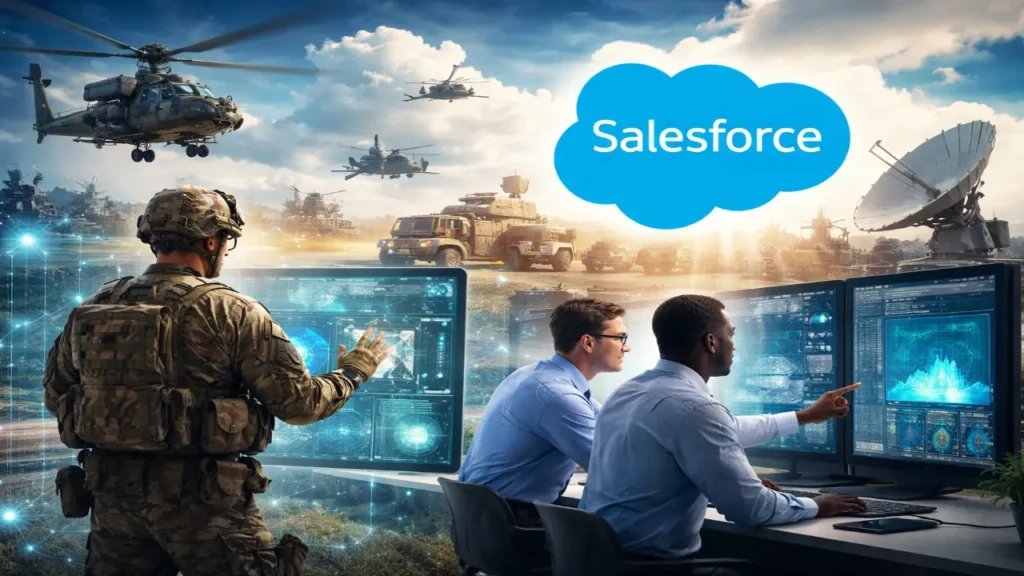
The U.S. Army’s decision to select Salesforce for a $5.6 billion defense IT modernization initiative marks a defining moment in the evolution of government technology adoption. This large-scale investment reflects the Army’s commitment to transforming legacy systems into agile, secure, and data-driven platforms capable of supporting modern defense operations. By choosing Salesforce, the Army signals a shift toward cloud-first, AI-enabled, and user-centric digital infrastructure designed to improve operational efficiency, mission readiness, and inter-agency collaboration.
This strategic move goes far beyond a routine software upgrade. It represents a fundamental transformation in how the U.S. Army manages data, engages with personnel, coordinates logistics, and responds to rapidly changing global security challenges.
Table of Contents
The Need for Defense IT Modernization
Defense organizations have relied on fragmented legacy systems built for an earlier era. While functional, these systems often struggle with scalability, real-time data access, interoperability, and user experience. As military operations become increasingly data-intensive and globally distributed, the limitations of traditional IT infrastructures have become more evident.
The U.S. Army faces complex challenges such as managing vast personnel records, coordinating supply chains across continents, ensuring cybersecurity compliance, and enabling real-time decision-making. Modern warfare and defense readiness now depend heavily on digital agility, predictive intelligence, and seamless information flow.
The $5.6 billion IT upgrade initiative addresses these challenges by consolidating systems, standardizing data platforms, and introducing advanced analytics and automation. Salesforce, with its proven enterprise-grade cloud capabilities, emerges as a strategic partner capable of delivering these outcomes at scale.
Why Salesforce Was Chosen
Salesforce’s selection is rooted in its ability to provide a secure, scalable, and highly configurable cloud platform that aligns with federal and defense requirements. Its architecture supports complex workflows, large data volumes, and role-based access controls critical for military environments.
Key factors behind the decision include:
- Cloud-native architecture that supports rapid deployment and scalability
- Robust security framework aligned with government compliance standards
- Advanced data management and analytics capabilities
- AI-driven automation for faster and smarter decision-making
- Proven track record with large public-sector organizations
Salesforce’s platform enables the Army to unify disparate data sources into a single, trusted system of record while maintaining strict governance and security controls.
Scope of the $5.6B Defense IT Upgrade
The $5.6 billion investment is expected to span multiple years and cover a wide range of operational domains within the U.S. Army. Rather than focusing on a single department or function, the initiative aims to modernize enterprise-wide capabilities.
Major areas of impact include:
Personnel and Human Capital Management
Managing millions of service members, veterans, and civilian employees requires accurate, real-time data. Salesforce enables centralized personnel records, streamlined onboarding, improved career tracking, and enhanced communication between leadership and personnel.
Logistics and Supply Chain Operations
Defense logistics is one of the most complex supply chains in the world. Salesforce helps improve visibility into inventory, equipment readiness, procurement workflows, and vendor coordination, ensuring resources are available when and where they are needed.
Operational Readiness and Mission Support
By consolidating operational data into unified dashboards, commanders and decision-makers gain real-time insights into readiness levels, deployment status, and resource allocation, enabling faster and more informed decisions.
Case and Service Management
Salesforce’s service capabilities allow the Army to manage internal requests, issue resolution, and support cases efficiently, improving response times and service quality across departments.
Role of AI and Automation in Defense Operations
A major advantage of Salesforce lies in its AI-driven capabilities, which play a crucial role in the Army’s modernization strategy. Artificial intelligence enables predictive insights, anomaly detection, and automated workflows that reduce manual effort and human error.
For the U.S. Army, AI-powered features can:
- Predict equipment maintenance needs before failures occur
- Identify personnel skill gaps and training requirements
- Optimize resource allocation across units
- Automate routine administrative tasks
- Enhance situational awareness through data analysis
By embedding AI into daily operations, the Army can shift from reactive decision-making to proactive, intelligence-driven strategies.
Strengthening Data Security and Compliance
Security is non-negotiable in defense IT systems. Salesforce’s platform is designed with multi-layered security controls, including encryption, identity management, and continuous monitoring. These features align with strict federal and defense cybersecurity standards.
The Army’s adoption of Salesforce also supports:
- Centralized data governance to prevent unauthorized access
- Audit-ready compliance reporting
- Role-based permissions to ensure information is accessed only by authorized personnel
- Resilience and disaster recovery capabilities
This secure-by-design approach ensures sensitive military data remains protected while still being accessible to those who need it.
Enhancing Interoperability and Collaboration
Modern defense operations require seamless collaboration across units, branches, and partner agencies. One of the longstanding challenges in military IT has been data silos that hinder information sharing.
Salesforce addresses this challenge by providing a unified platform that supports interoperability and standardized data models. This allows different departments and stakeholders to work from a single source of truth, improving coordination and reducing duplication of effort.
Enhanced collaboration leads to:
- Faster decision cycles
- Improved mission coordination
- Better alignment between strategic planning and execution
- Stronger collaboration with allied organizations
Impact on Government Digital Transformation
The U.S. Army’s selection of Salesforce sets a powerful precedent for government-wide digital transformation. It demonstrates that cloud-based CRM and data platforms are no longer limited to commercial use cases but are essential tools for national defense and public-sector efficiency.
This decision signals a broader shift toward:
- Cloud-first government strategies
- Increased adoption of AI and analytics in public services
- Greater focus on user experience for government systems
- Long-term cost efficiency through platform consolidation
Other government agencies are likely to view this initiative as a benchmark for future IT modernization efforts.
Economic and Industry Implications
A $5.6 billion defense IT contract has far-reaching implications beyond the U.S. Army. It reinforces Salesforce’s position as a trusted enterprise technology provider capable of supporting mission-critical operations at the highest level.
The initiative is also expected to:
- Drive innovation within the defense technology ecosystem
- Create opportunities for implementation partners and system integrators
- Accelerate the adoption of modern IT practices across the public sector
- Encourage further investment in secure cloud and AI technologies
For the broader technology industry, this move highlights the growing convergence of commercial cloud platforms and defense-grade requirements.
Long-Term Vision and Strategic Value
The true value of this IT upgrade lies in its long-term impact. Rather than delivering isolated improvements, Salesforce provides a flexible foundation that can evolve with the Army’s future needs.
As defense operations continue to change, the platform can support:
- New mission requirements
- Advanced analytics and predictive modeling
- Integration with emerging technologies
- Continuous process optimization
This adaptability ensures that the Army’s investment remains relevant and impactful for years to come.
Conclusion
The U.S. Army’s decision to select Salesforce for its $5.6 billion defense IT upgrade represents a landmark step in military digital transformation. By embracing a secure, cloud-based, and AI-enabled platform, the Army is modernizing how it manages data, supports personnel, and executes missions.
This initiative underscores the growing importance of enterprise technology in national defense and sets a new standard for government IT modernization. With improved agility, stronger security, and enhanced decision-making capabilities, the Army is positioning itself to meet both present and future challenges with confidence.