

Simplify Your Stack: Top Salesforce Integrations 2026
Introduction: Top Salesforce Integrations 2026
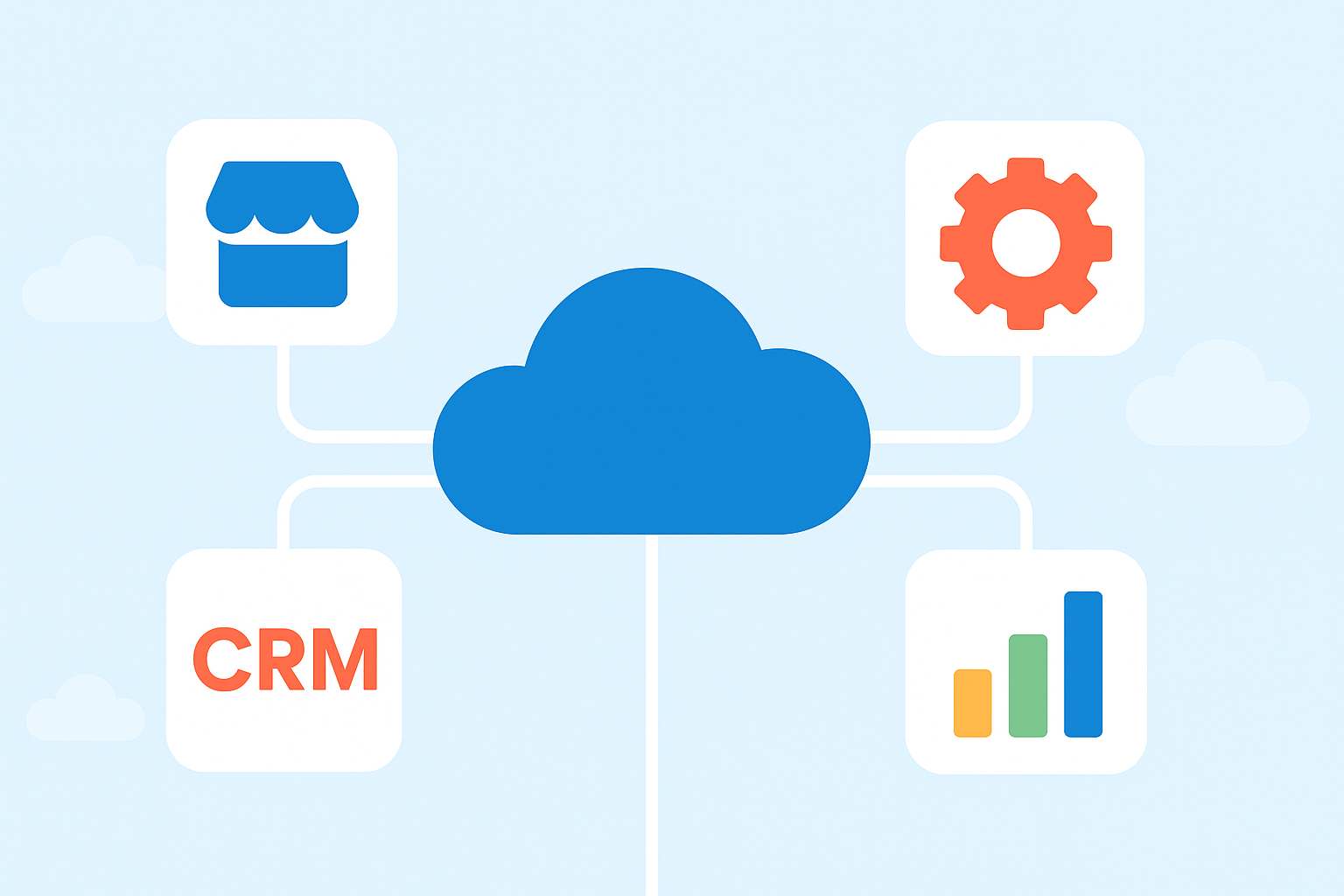
In 2026, businesses continue to rely on Salesforce as the backbone of their digital ecosystems, but success increasingly depends on how well Salesforce connects with the rest of their tech stack. With growing data volumes, customer expectations, and automation needs, integrations are no longer optional they’re essential. “Simplify Your Stack” in 2026 means embracing seamless Salesforce integrations that unify data, streamline operations, and accelerate growth without adding unnecessary complexity.
Table of Contents
The Integration Imperative in 2026
Modern organizations use dozens of tools across sales, marketing, support, finance, and IT. However, when these tools operate in silos, productivity plummets and insights fragment. Salesforce integrations solve this by enabling smooth data flow and consistent customer visibility across departments.
In 2026, the focus has shifted from connecting systems manually to using intelligent, prebuilt integrations powered by AI and automation. These integrations minimize setup time, reduce IT dependency, and help companies gain a single source of truth for all customer data.
1. MuleSoft – The Backbone of Connectivity
MuleSoft remains Salesforce’s flagship integration platform, providing a powerful way to connect virtually any system, data source, or device. In 2026, MuleSoft Anypoint Platform introduces deeper AI-driven integration recommendations and automated API management.
Companies use MuleSoft to connect Salesforce with ERP systems like SAP, HR platforms such as Workday, and custom on-premise databases. MuleSoft’s DataWeave transformations and automation flows help teams eliminate manual data entry, creating a fully connected enterprise.
2. Slack – Unified Collaboration Meets CRM Power
Since Salesforce acquired Slack, the integration between the two has evolved into a critical productivity hub. In 2026, Slack AI combined with Salesforce Data Cloud allows real-time insights directly in Slack channels.
Sales reps can receive deal updates, service agents get case summaries, and executives can track KPIs—all without leaving Slack. Workflow automation now extends across both platforms, turning conversations into instant actions inside Salesforce.
3. Tableau – From Data to Decisions
Data storytelling is more important than ever, and Tableau’s integration with Salesforce gives businesses a powerful way to visualize and understand their performance. In 2026, Tableau CRM (formerly Einstein Analytics) has matured into a deeply unified analytics experience within Salesforce.
By connecting Tableau dashboards to Salesforce Data Cloud, users can create interactive reports combining CRM data with marketing, finance, and third-party datasets. The result is faster decision-making and smarter forecasting.
4. Salesforce Data Cloud – Connecting Data Across Platforms
Salesforce Data Cloud has become the heart of many organizations’ data strategies. It serves as the “data layer” connecting marketing, sales, service, and commerce systems in real time.
With integrations into tools like Google Cloud, AWS, and Snowflake, Data Cloud allows teams to unify structured and unstructured data sources. By feeding these insights into Einstein AI, companies can deliver hyper-personalized experiences at scale.
5. Marketing Cloud and HubSpot – Automating Engagement
For marketing teams, integrating Salesforce CRM with marketing automation tools like Salesforce Marketing Cloud or HubSpot in 2026 means complete visibility into the customer journey. Campaign performance, lead scores, and engagement metrics sync directly into Salesforce.
Marketers can create AI-powered journeys that trigger based on CRM data, such as customer behavior, purchase history, or lifecycle stage. This integration ensures that sales and marketing work together seamlessly, improving conversion rates and customer retention.
6. QuickBooks and Xero – Streamlining Finance Workflows
Integrating Salesforce with financial software such as QuickBooks or Xero in 2026 continues to eliminate manual reconciliation and accelerate billing. Syncing invoices, payment status, and customer balances in real-time ensures that sales and finance teams stay aligned.
With automation tools, quotes and orders created in Salesforce automatically generate invoices in QuickBooks, cutting down on redundant work and reducing human error. The result: faster revenue recognition and improved customer satisfaction.
7. Zendesk and ServiceNow – Elevating Customer Support
Customer support is a vital extension of CRM, and integrating Salesforce with Zendesk or ServiceNow allows businesses to deliver faster, more personalized service. In 2026, these integrations include AI-powered sentiment analysis and predictive routing.
Agents can access a customer’s full history—purchases, support tickets, and communications—directly from Salesforce. This unified view reduces resolution times and enhances customer loyalty by ensuring every touchpoint feels connected.
8. Jira and Asana – Bridging CRM and Project Management
Salesforce integrations with Jira and Asana are now essential for businesses running agile operations. In 2026, automated synchronization ensures that when a sales opportunity closes, related implementation projects are instantly created in project management tools.
Teams can track progress, assign tasks, and view project updates within Salesforce. This integration reduces handoff delays between sales, operations, and delivery teams, creating a smoother post-sale experience for customers.
9. Shopify and Magento – Connecting Commerce and CRM
E-commerce integration has become vital as businesses expand omnichannel strategies. Connecting Shopify or Magento with Salesforce in 2026 ensures customer data, order details, and product information flow seamlessly between platforms.
When a customer makes a purchase, Salesforce automatically updates records, enabling sales and support teams to view the latest order activity. Combined with Marketing Cloud, this integration supports targeted upselling, abandoned cart recovery, and loyalty campaigns.
10. Zoom and Microsoft Teams – Enhancing Virtual Selling
In the hybrid business world of 2026, virtual meetings remain crucial. Integrating Salesforce with Zoom and Microsoft Teams gives sales reps context-driven meeting capabilities.
Meeting links, notes, and recordings are automatically logged into Salesforce records. With AI-generated summaries, reps save time on data entry and can follow up with precise insights based on the conversation.
11. DocuSign – Simplifying Agreements and Approvals
DocuSign continues to be a cornerstone integration for Salesforce users. The 2026 integration supports next-gen eSignature workflows with advanced automation.
Contracts generated from Salesforce can now trigger automatic approval flows, reminders, and status updates. The entire process—from quote to close—is streamlined, making it easier to manage agreements securely and efficiently.
Why Integration Strategy Matters
By 2026, the companies seeing the highest ROI from Salesforce aren’t necessarily using more tools—they’re using the right integrations. The goal isn’t to add complexity but to build a unified, intelligent system where every department works from a shared truth.
Strong integration strategy leads to:
- Better productivity: Teams spend less time switching between apps.
- Improved data accuracy: No more duplicate or inconsistent records.
- Faster decision-making: Unified data creates clearer insights.
- Enhanced customer experience: Every interaction feels seamless and informed.
Key Takeaway:
Simplifying your stack with Salesforce integrations in 2026 is about optimizing—not overcomplicating—your digital ecosystem. As automation, AI, and data connectivity evolve, businesses that strategically align their tools will gain a lasting competitive edge.
The future belongs to companies that integrate intelligently—building a connected, agile, and insight-driven enterprise powered by Salesforce.