

Salesforce Faces Internal Backlash After Benioff Controversial ICE Joke
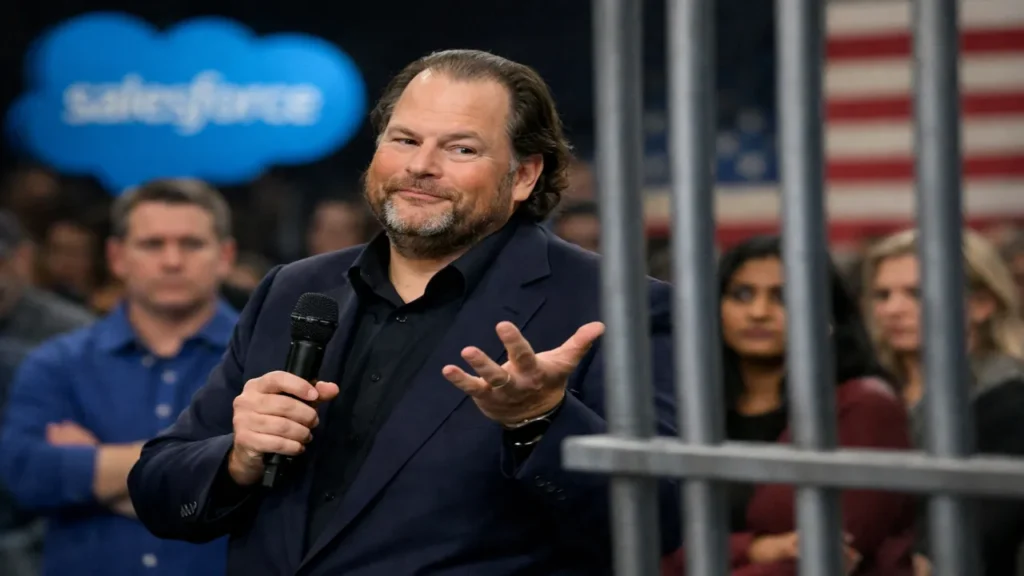
In the ever-evolving corporate landscape, leadership communication carries enormous weight. A single remark, especially from a high-profile executive, can spark debate, trigger internal unrest, and shape public perception. Recently, Salesforce found itself navigating internal tensions following a controversial joke made by its CEO, Marc Benioff, referencing ICE (U.S. Immigration and Customs Enforcement).
While the remark may have been intended as humor, it reportedly sparked discomfort and criticism among employees, highlighting deeper challenges companies face when political sensitivity intersects with corporate culture. This situation serves as a case study in leadership accountability, employee expectations, and the fragile balance between free expression and corporate responsibility.
Table of Contents
Understanding the Context of the Controversy
Salesforce has long positioned itself as a values-driven organization. The company frequently emphasizes equality, ethical leadership, social responsibility, and employee well-being. Over the years, leadership has taken public stances on social issues ranging from climate change to diversity initiatives.
Against that backdrop, the CEO’s comment referencing ICE, an agency often associated with intense political debate, was perceived by some employees as tone-deaf or misaligned with the company’s inclusive culture.
Even when intended as humor, references to politically sensitive institutions can resonate differently across a diverse workforce. What one audience interprets as lighthearted satire, another may experience as uncomfortable or inappropriate, especially when tied to immigration, enforcement, and human rights narratives.
Why the Joke Triggered Internal Backlash
1. The Political Sensitivity of ICE
ICE is a politically polarizing institution in the United States. For many, it represents border security and federal law enforcement. For others, it is associated with controversial immigration enforcement actions and humanitarian concerns.
When a corporate leader references such an agency even in jest, it inevitably intersects with personal values, lived experiences, and deeply held beliefs among employees.
2. The Power Dynamic in Corporate Humor
Humor in leadership is complex. When a CEO makes a joke, it carries more weight than casual remarks between colleagues. Employees may feel pressure to laugh or remain silent, even if they are uncomfortable.
The higher the position of authority, the greater the responsibility to ensure remarks do not alienate segments of the workforce. Leadership humor isn’t neutral—it shapes tone, culture, and perceived safety.
3. Salesforce’s Strong Social Identity
Salesforce is known for championing progressive corporate values. Employees often join the organization because they align with its stated mission and ethical commitments.
When leadership commentary appears inconsistent with that identity, it can create cognitive dissonance. Employees may question whether the company’s public messaging truly reflects internal culture.
The Broader Challenge of Political Neutrality in Tech
Technology companies increasingly operate at the intersection of business and politics. From data privacy regulations to AI governance and immigration policy, tech leaders are frequently drawn into public discourse.
However, companies face a difficult balancing act:
- Taking public stands can inspire employees and customers.
- Remaining silent can be seen as indifference.
- Casual political commentary can spark unintended controversy.
Salesforce, like many tech giants, operates in a globally diverse environment. What resonates positively in one region may be controversial in another. In such a landscape, even offhand remarks can quickly escalate.
Employee Expectations in Modern Corporate Culture
Today’s workforce expects more than competitive salaries and benefits. Employees increasingly demand:
- Psychological safety
- Cultural sensitivity
- Clear ethical alignment
- Transparent leadership
Younger professionals, particularly Millennials and Gen Z employees, often evaluate employers based on social values as much as financial performance.
When leadership comments appear to conflict with those values, internal backlash becomes more likely. Employees may express concerns through internal forums, anonymous surveys, Slack channels, or leadership town halls.
The Role of Internal Communication
Situations like this underscore the importance of proactive internal communication.
When controversy arises, organizations must:
- Acknowledge concerns promptly.
- Provide context if necessary.
- Reinforce core values.
- Offer space for dialogue.
Silence can amplify tension. Conversely, transparent engagement can transform controversy into an opportunity for cultural reinforcement.
If handled effectively, such moments can strengthen trust rather than weaken it.
Leadership Accountability in the Age of Instant Feedback
Corporate leaders today operate under unprecedented scrutiny. Social media, internal communication platforms, and digital transparency mean that every comment can be amplified instantly.
In earlier decades, executive remarks might have remained confined to boardrooms. Today, internal conversations often become public narratives within hours.
This environment demands heightened awareness from leadership teams. Executives must carefully consider:
- Cultural implications
- Political interpretations
- Global employee sentiment
- Media amplification risk
Leadership communication is no longer just about clarity—it’s about foresight.
Corporate Values vs. Personal Expression
One of the deeper questions raised by this incident is the boundary between personal expression and corporate representation.
When a CEO speaks publicly or even internally, the distinction between personal opinion and corporate stance blurs. Employees often interpret leadership remarks as reflections of company policy or values.
This raises critical considerations:
- Should CEOs avoid politically sensitive humor altogether?
- How much personal authenticity should leaders display?
- Where does corporate neutrality begin and end?
There is no universal answer. However, many organizations now train executives in cultural intelligence and crisis-sensitive communication to mitigate these risks.
Impact on Employer Brand
Employer brand is one of Salesforce’s strongest assets. The company has cultivated a reputation as a progressive, people-first organization.
Internal backlash, even if limited, can influence:
- Employee morale
- Talent retention
- Recruitment perception
- Public brand narrative
Prospective employees increasingly research workplace culture before accepting offers. Controversies, even minor ones, can become part of that evaluation process.
That said, how the company responds may ultimately matter more than the initial remark itself.
Turning Controversy into a Cultural Reset
Moments of internal tension can become powerful cultural reset points.
If leadership uses the incident to:
- Reaffirm commitment to inclusion
- Encourage open dialogue
- Demonstrate humility
- Clarify values
Then the organization may emerge stronger.
Acknowledging missteps—if perceived as such can reinforce authenticity and maturity in leadership. Employees often respond positively to accountability and transparency.
The Increasing Risk of Humor in Executive Communication
Humor can humanize leaders. It builds relatability and warmth. However, humor tied to politics, religion, race, or immigration carries heightened risk.
In a global company with tens of thousands of employees, audiences vary widely in background and perspective. What feels harmless in one context may feel personal in another.
Executive coaching increasingly emphasizes:
- Avoiding politically charged references
- Testing remarks with communications teams
- Maintaining cultural neutrality in large forums
This trend reflects a broader shift toward careful, values-aligned messaging.
Internal Backlash Does Not Equal Organizational Crisis
It’s important to maintain perspective. Internal disagreement or backlash does not automatically signal organizational instability.
Healthy companies often encourage employees to voice concerns. Constructive dissent can indicate a culture where individuals feel empowered to speak up.
The real indicator of organizational strength lies in response, not in the absence of controversy.
If employees feel heard and leadership demonstrates reflection, the long-term impact may be minimal.
Lessons for Corporate Leaders
This episode offers broader insights for leaders across industries:
1. Every Word Matters
Executives operate under amplified visibility. Casual remarks can carry institutional weight.
2. Cultural Sensitivity Is Strategic
In diverse workplaces, understanding the emotional impact of political references is critical.
3. Alignment Builds Trust
When leadership messaging aligns consistently with corporate values, trust deepens.
4. Transparency Mitigates Risk
Open communication after controversy can prevent escalation.
The Bigger Picture: Leadership in a Polarized Era
We live in a time of heightened polarization. Political institutions, immigration policy, and federal agencies often symbolize deeper ideological divides.
Corporate leaders navigating this environment must balance authenticity with neutrality. Employees do not expect perfection, but they increasingly expect awareness.
For a company like Salesforce, whose identity is closely tied to values-driven leadership, moments like this become magnified. They test consistency between messaging and action.
Moving Forward
As Salesforce continues to innovate in CRM, AI integration, and enterprise solutions, maintaining cultural cohesion remains equally important.
Internal controversies, while challenging, can catalyze growth:
- Strengthening leadership communication frameworks
- Reinforcing diversity and inclusion commitments
- Encouraging respectful dialogue
Ultimately, companies are judged not solely by isolated remarks but by sustained behavior and institutional integrity.
Conclusion: Benioff Controversial ICE Joke
The internal backlash following Marc Benioff’s controversial ICE joke underscores a broader reality: leadership communication in today’s corporate world demands precision, empathy, and cultural awareness.
In politically sensitive climates, humor carries elevated risk, especially from executives representing globally recognized brands. Salesforce now faces an opportunity to reaffirm its values, strengthen internal trust, and demonstrate mature leadership.
Whether this episode becomes a minor footnote or a defining cultural moment depends largely on response, reflection, and alignment moving forward.