

n8n in Healthcare: Automating Patient Data & Appointments
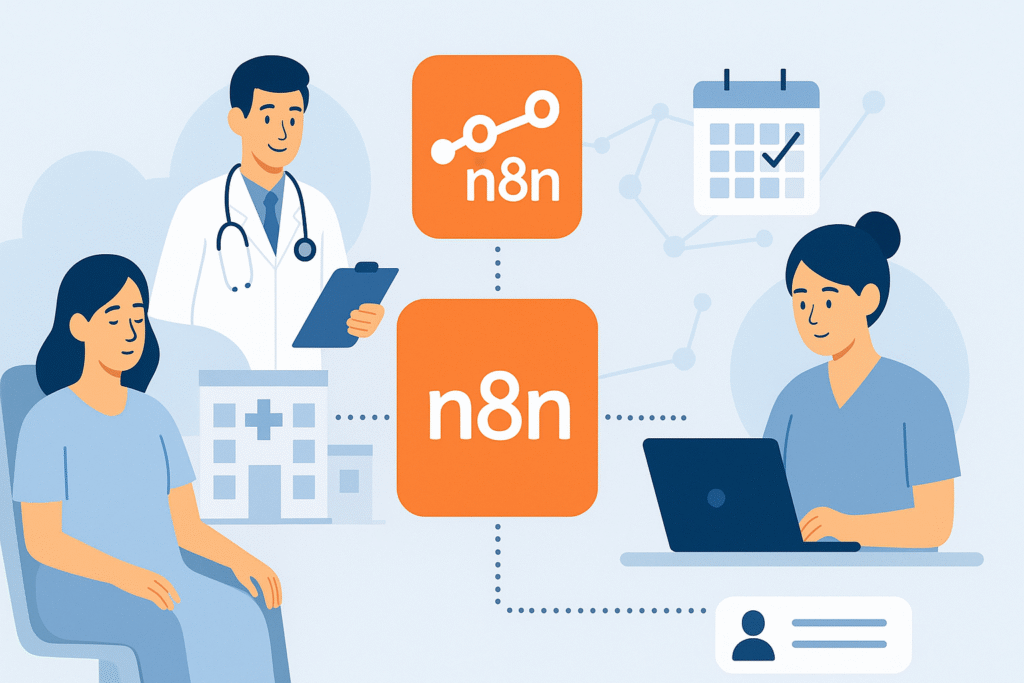
Healthcare is one of the most data-intensive industries in the world. From patient records and lab results to appointment schedules and insurance claims, healthcare organizations deal with vast amounts of information every day. Manually managing these procedures can be time consuming, prone to errors, and often leads to inefficiencies that affect patient care. This is where workflow automation platforms like N8N come into play, enabling healthcare providers to streamline operations, improve accuracy and enhance the patient experience.
Table of Contents
Understanding n8n in Healthcare
n8n is an open-source workflow automation tool that allows organizations to automate repetitive tasks and integrate disparate systems seamlessly. Unlike traditional automation platforms, N8N offers flexibility with its “fair-code” model, enabling healthcare organizations to customize workflows according to their unique needs. It supports a wide range of integrations with popular applications, databases and APIs, making it suitable for complex healthcare environments.
Automating Patient Data Management
Patient data management is one of the most critical aspects of healthcare operations. Traditionally, hospitals and clinics have relied on manual data entry, which is time-consuming and prone to human error. With N8N, healthcare providers can automate data collection, processing, and storage, reduce errors, and improve efficiency.
For example, patient intake forms submitted through Google Forms, Typeform, or other online platforms can be automatically routed into a clinic’s electronic health record (EHR) system using N8N. This ensures that patient information is accurately captured and immediately available to health care professionals. In addition, laboratory results from diagnostic tools can be automatically updated in the patient profile, eliminating delays in treatment decisions.
Automation also improves compliance with healthcare regulations such as HIPAA. By standardizing data handling and ensuring secure transfer between systems, N8N minimizes the risk of breaching or mishandling sensitive patient information.
Streamlining Appointment Scheduling
Scheduling appointments is another area where automation can make a significant impact. In many In healthcare settings, staff spend significant time coordinating appointments, sending reminders, and managing cancellations. This often leads to scheduling conflicts, missed appointments, and frustrated patients.
N8N can integrate scheduling platforms such as Calendly, Google Calendar, or hospital-specific systems to automate the entire appointment process. For example:
- When a patient requests an appointment through a website form, n8n can check provider availability and automatically schedule an appointment.
- Automated reminders can be sent via email, SMS, or messaging apps, reducing no-shows and improving patient attendance.
- If a patient cancels or reschedules, n8n can instantly update the schedule and notify the relevant staff, ensuring seamless coordination.
By automating these repetitive tasks, healthcare providers can focus more on patient care rather than administrative duties.
Enhancing Communication Across Departments
In healthcare, efficient communication between departments is important. Laboratory results, imaging reports, and referrals need to be shared quickly to avoid delays in patient care. N8N can facilitate this by creating automated workflows that route critical information to the right personnel in real time.
For example, when a lab completes a test, n8n can automatically send the results to both the attending physician and the patient portal. Similarly, referrals from primary care doctors to specialists can be logged and tracked automatically, ensuring that no patient falls through the cracks. This level of coordination reduces miscommunication, speeds treatment, and improves overall patient outcomes.
Reducing Administrative Burden
Healthcare professionals often spend a large part of their day on administrative tasks rather than patient care. Repetitive tasks such as updating records, sending follow-up emails, or creating reports can be tedious and time-consuming. N8N automates these tasks, freeing staff to focus on more critical activities.
N8N can automatically generate weekly or monthly reports on patient visits, appointment statistics, and treatment outcomes. It can also trigger notifications for billing or insurance processing, ensuring that administrative workflows run smoothly without manual intervention. Over time, such automation not only improves operational efficiency but also reduces fatigue among health care workers.
Supporting Telemedicine and Remote Care
The rise of telemedicine has revolutionized health care delivery, particularly in remote areas. However, conducting virtual consultations comes with its own challenges, including scheduling, patient verification, and follow-up communication. N8N can help automate these processes to provide a seamless telehealth experience.
For example, when a patient books a consultation online, N8N can verify their details, send a confirmation message, and provide a secure link for a virtual appointment. After the session, N8N can automatically update the patient’s record, send follow-up instructions, and schedule any necessary follow-up appointments. This level of automation ensures a smooth, efficient, and patient-friendly telemedicine experience.
Ensuring Data Security and Compliance
Healthcare data is highly sensitive, and maintaining compliance with privacy regulations is non-negotiable. N8N provides a secure way to manage patient information across systems without exposing data to unnecessary risks. Workflows can be configured to encrypt sensitive information, log access, and restrict data sharing to only authorized personnel.
Moreover, N8N’s automation reduces the chances of human error, such as filing incorrect records or sending information to the wrong recipient. By maintaining a consistent and secure workflow, healthcare organizations can achieve regulatory compliance while building trust with patients.
Real-World Applications
Many healthcare providers have already taken advantage of n8n to improve efficiency:
- Diagnostic Centers: Integrating laboratory equipment with patient records for real-time updates.
- Telemedicine platform: streamlining virtual consultations, follow-ups, and patient communication.
- Medical Research: Gathering information from multiple sources and automated reporting for medical tests.
- Hospitals and Clinics: Automated patient intake, lab result notifications, and appointment reminders.
These examples demonstrate that n8n can adapt to a variety of healthcare scenarios, providing both small clinics and large hospitals with a flexible, cost-effective automation solution.
Benefits of Using n8n in Healthcare
- Time efficiency: Reduces manual work for healthcare workers, allowing more focus on patient care.
- Accuracy: Reduces errors in data entry, appointment scheduling, and reporting.
- Cost savings: Automate repetitive tasks, reduce administrative overhead.
- Patient satisfaction: improves communication, reduces wait times, and ensures timely follow-ups.
- Scalability: Workflows can be easily modified and scaled as the organization grows.
- Compliance: Ensures data handling aligns with HIPAA and other regulatory standards.
Challenges and Considerations
While N8N offers tremendous benefits, healthcare providers must consider certain challenges:
- Integration complexity: Legacy healthcare systems may require custom connectors.
- Training: Employees may need guidance on how automated workflows work.
- Data Privacy: Ensuring secure handling of sensitive patient information is critical.
With proper planning and implementation, these challenges can be effectively managed, making N8N a valuable tool in modern healthcare operations.
Key Takeaway:
Automation in healthcare is no longer a luxury—it’s a necessity. Platforms like N8N empower healthcare organizations to streamline patient data management, appointment scheduling, interdepartmental communication, and administrative tasks. By automating repetitive workflows, healthcare providers can improve accuracy, reduce operational burden, and focus on what really matters: providing high-quality patient care.