

Employee Reactions to Salesforce Leadership Statements
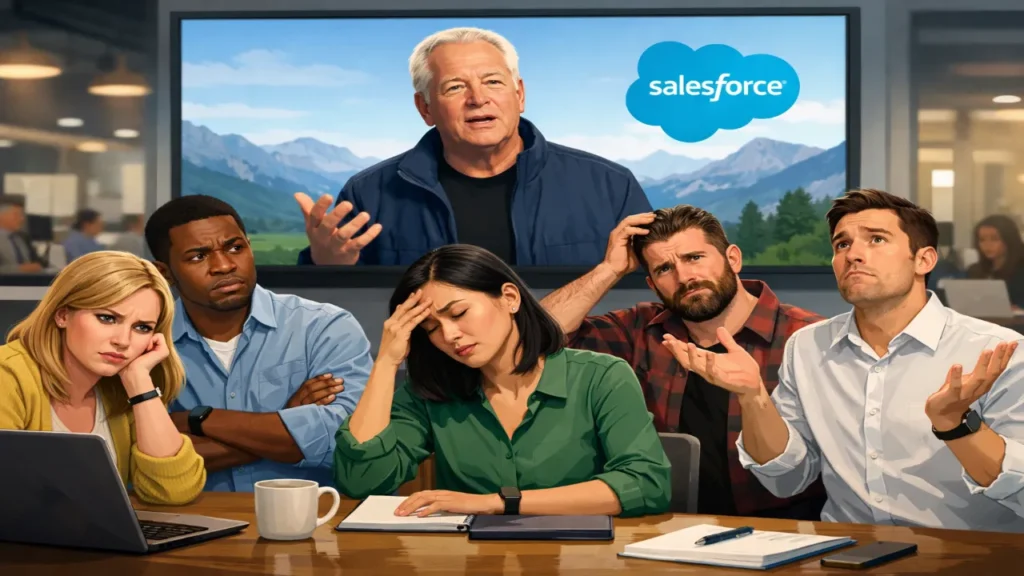
Introduction: Salesforce Leadership Statements
Salesforce, a powerhouse in the CRM industry, has long been known for its innovative culture and outspoken leadership. However, recent statements from top executives have sparked intense backlash among employees, highlighting tensions around inclusivity, sensitivity, and corporate values. This blog post dives into the specifics of these incidents, employee sentiments, and their broader implications, drawing from documented reactions and internal dynamics.
Table of Contents
The Triggering Incident
At Salesforce’s annual leadership kickoff event in Las Vegas, CEO Marc Benioff made remarks that quickly ignited controversy. During a session, he invited international employees to stand and express gratitude for their presence, then joked about ICE (Immigration and Customs Enforcement) agents monitoring them in the venue. This comment, intended as lighthearted, landed poorly amid heightened concerns over immigration policies and employee travel fears.
Employees described the joke as tone-deaf and inappropriate, especially given the diverse workforce. One anonymous staffer noted in internal Slack channels that it overlooked real anxieties about surveillance and travel restrictions. The timing exacerbated the issue, as the event coincided with broader geopolitical sensitivities, remarking feel dismissive of vulnerable team members.
Immediate Employee Backlash
Reactions poured in swiftly on platforms like Slack and LinkedIn. Farone Rasheed, a Salesforce employee, publicly shared her shock, anger, sadness, and frustration on LinkedIn, fearing retaliation for speaking out. She urged colleagues to voice concerns and demanded an apology, response, and action from leadership, emphasizing the need for accountability.
Slack messages captured raw employee outrage. “A joke about ICE surveilling employees’ travel, when there are literally employees afraid to travel for work due to the current situation,” one wrote, calling it unacceptable. Another stated, “It’s hard to believe this company still has values when you make completely off-base jokes about ICE in your opening keynote.” This internal uproar led some to skip subsequent sessions, prompting HR emails questioning absences, “Your absence was noted during today’s CKO programg” which further fueled perceptions of insensitivity.
Circulation of an open internal letter amplified the dissent. Organized during the event, it called on Benioff to denounce related U.S. actions and reaffirm Salesforce’s values, signaling organized pushback from current and former staff.
Leadership’s Handling and Double Standards
Critics highlighted a perceived double standard: a rank-and-file employee making the same joke might face discipline, yet the CEO’s went unaddressed initially. This eroded trust, with employees questioning if behavioral standards apply equally across hierarchies. The lack of an immediate apology risked damaging credibility, as internal comms failed to bridge the gap between executive intent and workforce reality.
Salesforce’s history of progressive stances on equality, philanthropy, and employee engagement via all-hands meetings clashed with this moment. Past efforts like “The Daily” communications aimed to foster openness, but here, silence amplified discord. Employees felt leadership’s words undermined the company’s Ohana culture, which emphasizes family-like inclusivity.
Broader Context of Layoffs and Reorganization
Compounding frustration, these statements followed layoffs affecting around 1,000 employees in marketing, product management, data analysis, and Agentforce AI products. Nine laid-off workers shared experiences on LinkedIn, tying cuts to AI prioritization despite earlier vows of AI as “core” to products. Reactions framed leadership statements as out-of-touch amid job insecurity.
Leadership changes added layers. Recent reorganizations and a CEO transition emphasized AI strategy and long-term ROI, with AI adoption surging 282% since 2023. Employees’ worried statementswere distracted by these shifts, questioning if cultural missteps signaled deeper instability. Internal comms during transitions stressed continuity, but frontline reactions suggested unresolved tensions.
Patterns from Past Employee Sentiments
This isn’t isolated. Reddit threads reveal longstanding gripes about toxic leadership in Salesforce teams, with one case where 65% of a sales team left before changes occurred. Exit interviews often highlight ignored feedback, retaliation fears, and mismanagemen echoing current Slack dynamics. Employees in marketing and tech roles described vicious managers post-HR complaints, leading to leaves or job hunts.
Such patterns underscore a cycle: bold leadership statements spark reactions, but slow responses breed cynicism. In one instance, a product owner clashed with a non-expert leader over Salesforce’s setup quirks, like menu placements, escalating to yelling, mirroring frustrations over unaddressed executive missteps.
Impact on Company Culture and Morale
The fallout risks morale dips, higher turnover, and productivity hits. Employees skipping sessions signal disengagement, while public posts like Rasheed’s invite external scrutiny. For a company reliant on creative, diverse talent in AI and CRM innovation, alienated workers could stifle collaboration.
Double standards erode psychological safety, vital for Salesforce’s innovation-driven environment. When leaders’ words trigger fear of retaliation, open dialogue is key to tools like all-hands meetings. Broader studies show such incidents amplify quiet quitting, especially post-layoffs, as staff weigh values alignment.
Yet, Salesforce’s resilience shines in past recoveries. Proactive AI comms and cultural pivots have retained talent, suggesting potential for course-correction.
Lessons for Leadership Communication
Effective leaders tailor messages to audience realities, avoiding humor that punches down. Benioff’s style is blunt and visionary in some contexts but falters here, highlighting context’s role. Immediate acknowledgment, even if not apologetic, could mitigate damage, as seen in successful transition notes praising continuity.
Training on inclusive communication, especially for global teams, is crucial. Salesforce’s scale demands nuance around immigration, politics, and AI ethics. Employee resource groups could channel feedback pre-statements, fostering trust.
Path Forward for Salesforce
To rebuild, leadership must act decisively: a public apology, policy clarifications on immigration support, and town halls addressing fears. Integrating employee voices into AI transitions amid layoffs shows commitment to Ohana.
Monitoring sentiment via anonymous surveys and acting on trends prevents escalation. Long-term, embedding DEI in leadership training aligns words with actions, turning backlash into growth.